Sunday, January 30, 2005

Election Day: Iraqi Courage

Iraqis Vote for Bright Future
Michael Yon

Baquba, Iraq

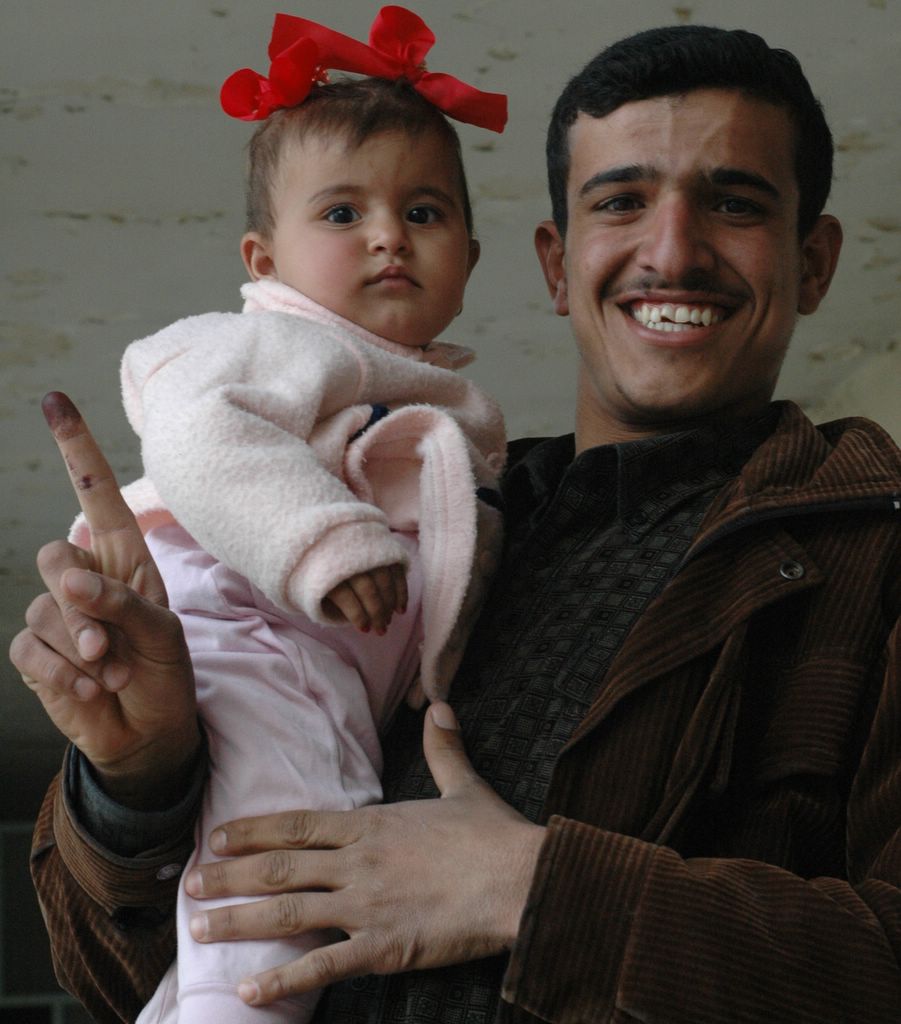
A face can fake a thousand smiles, but a thousand faces hide nothing. Today I saw a thousand smiles on a thousand faces of Iraqis who were unable to contain their joy and pride. The act of voting spread elation through the crowds the way the sounds of explosions have so often spread fear and despair. Today, I witnessed history of global proportions unfold in the small country of Iraq.

Knowing the magnitude of this event, I wanted to witness it from the most important perspectives, and to meet the people who were taking part. My election day began in the US military headquarters, then shifted to American and Iraqi soldiers on the ground. Next, at the JCC (Joint Communications Center) that would oversee the elections for Diyala Province; and finally, where votes were being cast.

At the US Army Tactical Operations Center (TOC) FOB Gabe, Baquba, election day began with thuds, booms and gunfire. By 0032 hours, the board in the TOC listed eight roadside bombs in Baquba, and the radio crackled continuously with reports of US forces encountering small-arms fire. Two minutes later, at 0034, a US patrol in Baquba hit a roadside bomb. No one was injured and the soldiers continued the mission.

The pace only quickened. Reports of enemy contact poured in. At 0105, a patrol encountered heavy gunfire and mortar attack. Four minutes later, Lt. Colonel Bullimore, commander of operations on FOB Gabe, walked into the TOC. Sergeants and officers in the TOC introduced Bullimore to the battlefield with a SITREP (situation report). Four minutes later, at 0113, more reports of explosions and gunfire. Two minutes later, at 0115, the voice of a US soldier issued from one of the radios, casually describing more enemy contact. Simultaneously a memo appeared on the secret prompter that a polling site was, "reporting intense fire." A minute later, the same prompter scrolled that two Kiowa helicopters were inbound. Meanwhile, a television screen showed a live civilian broadcast that Iraqis in 14 other countries had begun voting.

The briefing over, LTC Bullimore headed to the JCC in downtown Baquba. I journeyed in his vehicle. The soldiers believed that the JCC would be attacked today.

We arrived at the JCC where Iraqi and American officials were engaged in last-minute efforts to ensure polling sites opened on time. The insurgents were already doing their best--with bombs, mortars and machine guns--to make sure those polls stay closed.

Yet by 0700, most of the polls had opened and voters tentatively began to turn out. Reports of gunfire and bombs continued streaming in, but as the hours inched by, reports of heavy voter turnout also increased. There was a live feed from downtown Baquba by an enthusiastic CNN correspondent. Iraqi voters were not only coming to the polls, but were so exuberant once there, that their excitement drowned out the correspondent.

By noon, it was obvious that the terrorists would not own this day. But terrorists were clearly making the effort, killing voters around Iraq. Yet more voters continued to turn out. Lines were forming at some polls.

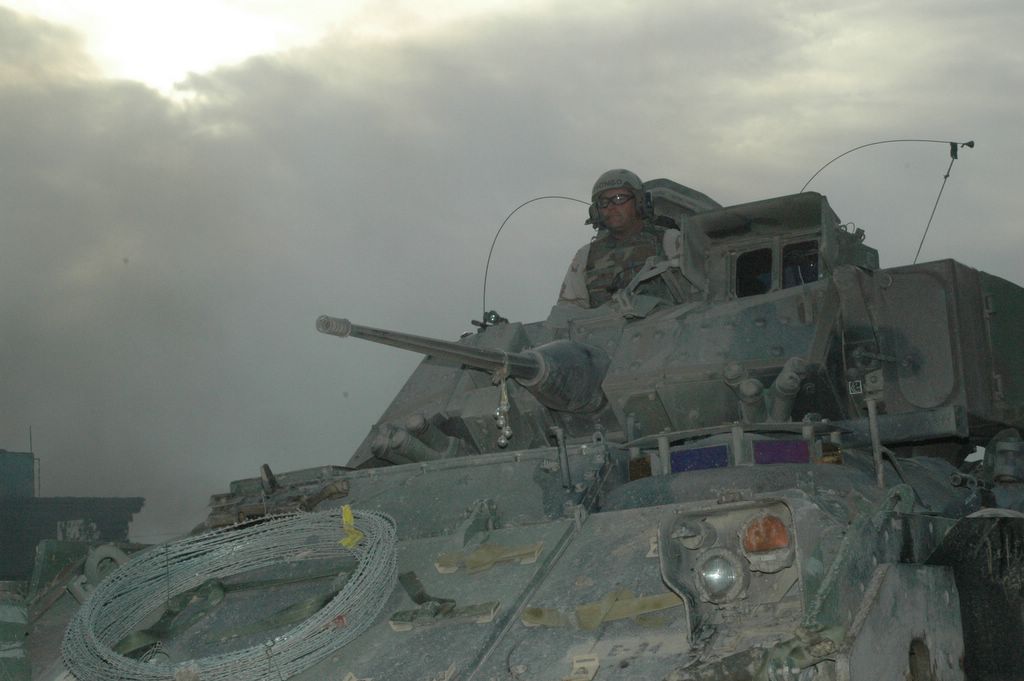
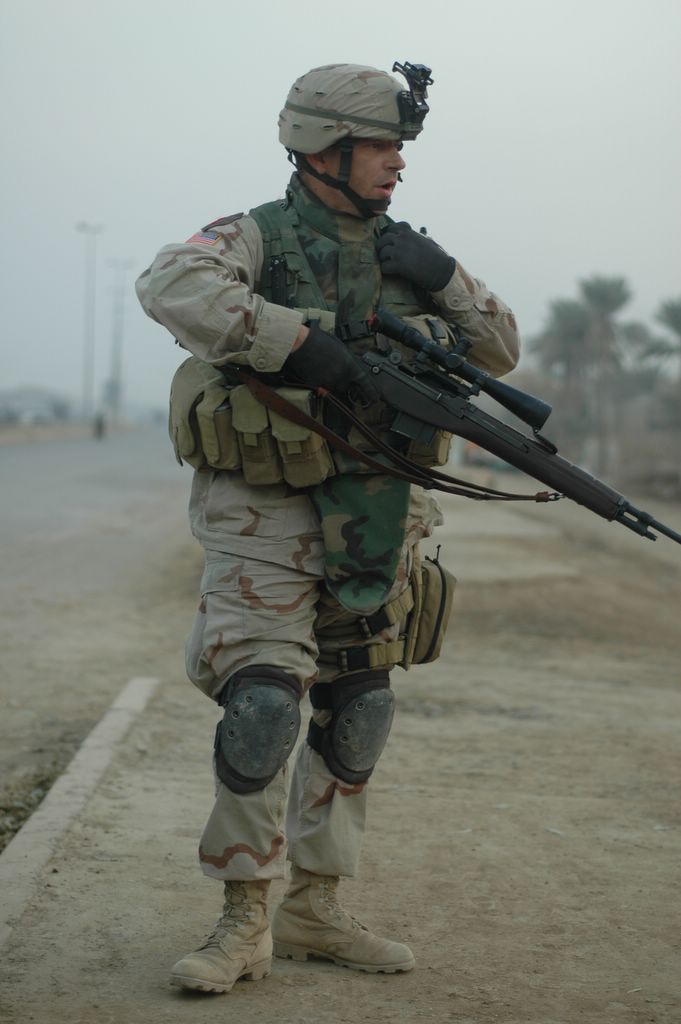
A US patrol in the Buhriz area of Baquba came under small-arms and RPG attack. The reinforced "Punisher" platoon, led by Lieutenant TJ Grider, consisted of three Bradley fighting vehicles and six Humvees. Punisher had been moving to the Buhriz area, where insurgents were attacking the polling station, successfully preventing voting. American units had been instructed to minimize combat to avoid frightening voters. But since nobody was voting at that station due to the ongoing attacks, Lt. Grider said that the commander of Coalition forces in this area, Colonel Pittard, gave him clear instructions: "If they aren't going to vote anyway, we might as well kill some bad guys."

Punisher was told to kill people who were preventing voting. And the people who were preventing voting started trying to kill Punisher platoon. First came three RPGs, then two more. But Punisher was moving in and swept up through the area, surprising two men who held AKs and had RPGs propped up against a wall. The Humvee gunner killed them.

A Bradley vehicle on the next road reported killing three more, then blew up two cars, which were not supposed to be there. There was heavy shooting during which an American was slightly wounded, but soon returned to duty. The polling station was closed down and moved to another area of Baquba, where voters soon arrived.

I wanted to see the voting hand, so I hitched on the first convoy I could get, which happened to be taking that same CNN crew to another dangerous polling site in Baquba. In fact, of the 40 polling sites in Baquba, some US soldiers were wagering this one was most likely to be bombed.

The CNN crew had only three people, including the correspondent. They were to be dropped off and left at the polling station. I stayed with them. The American Army was not permitted to be stationed at the polling site; this was to be an Iraqi vote. So, the soldiers left us behind in the same neighborhood where I had been accompanying the Army on raids just a week earlier.

An hour passed while voters stretched out in a line perhaps thirty yards long. A second hour passed, and the line remained steady. No bombs, no RPG attacks. But if there were to be any attacks, they might come at the end of the day, to destroy the ballots. The terrorists knew that to destroy ballots was to destroy the elections. Yet the voters were exuberant, as if there was no possibility of attack. I spoke with many people--Sunnis, Shias, Christians, and others were standing in the same lines.

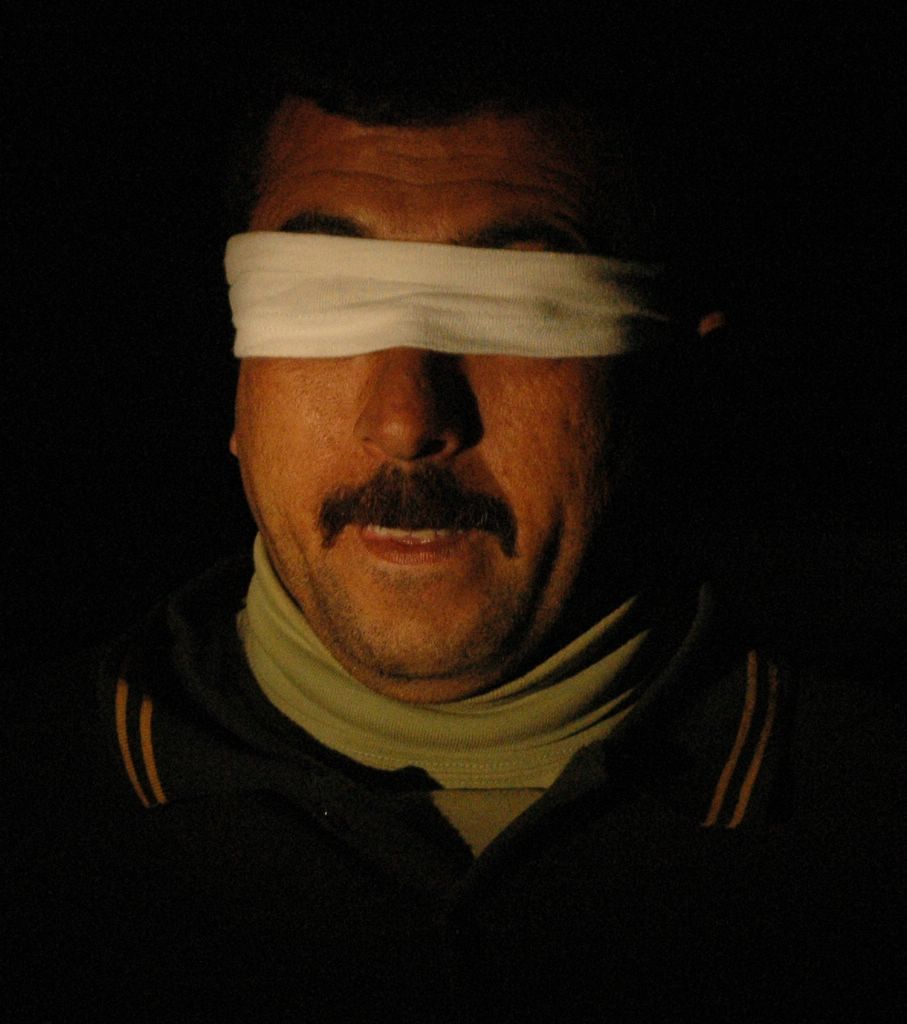
Three police officers handcuffed a large man. They escorted him with great purpose to an abandoned room of the school. I approached to see what was happening. Did he have a bomb?

The policemen, who had been asking me to photograph them for the last hour or two, suddenly told me to stop taking pictures. Naturally, this caused me to pick up the camera and take pictures.

"What did this man do?" I asked an Iraqi official.
"He was, let's say, misbehaving."
Misbehaving? I hadn’t heard any bombs or gunfire at the polling station (not in the polling station, anyway), nor any commotion. What had he done? The official would not tell me.
"Is he a terrorist?" I asked.
"No."
"Is he a criminal?"
"Not exactly."
"Why did you arrest him?"
"Not important, really not important."
"You have arrested a man who came to vote. This is very important. Why have you arrested him?"
Finally, the official embarrassingly explained that the man had grabbed the backside of the woman producer for CNN.
I sensed that he did not want a writer to know what this Iraqi man had done.
"What will you do with him?"
"He will spend two weeks in jail."
"For grabbing the producer?"
"For grabbing the woman, yes."

Eventually, the police conversed with the CNN crew, and released the man.

Meanwhile, more than a thousand Iraqis had come into the polling center. Men and women, old and young. There were religious leaders and attorneys, police and children. And every single person seemed to smile and give the thumbs-up.

"From what country are you?" I heard this dozens of times.
"Ameriki," I would say with a smile.
"Ameriki, yes!" was a typical thumbs-up response, accompanied by sincere smiles.

Even some of the women, a couple of whom were old and could barely walk, actually gave the thumbs-up.

As the polls began to close at 1700 Baquba time, last-minute voters ran in breathlessly and smiling. Their votes were cast and the polls closed. More than 1,400 people had voted at this site, and CNN was going live next to the ballot boxes.

We had been alone with the Iraqis at the polling station for about three hours when the American soldiers came to pick us up. Seeing the American soldiers move through the school was a happy relief; this was a very dangerous neighborhood. The people had been friendly, but I did not like being there on election day without American military nearby.

The CNN crew was having technical problems with the broadcast. The American soldiers were trying to hurry them; the sun was setting and gunfire was increasing.

About two minutes after we drove away, tracers began zipping nearby. We pulled into the JCC just as a firefight erupted. I took the stairs to the roof and watched as our troops began firing into the neighborhood we had just come from. Tracers flew by the JCC roof. There was machine-gun fire down in the neighborhood; American forces were firing machine guns and rifles at suspected targets. Explosions.

The polls had closed and the ballots were now critical. Losing the ballots meant losing the elections. The ballot boxes were still out there.

My video camera was running when a voice came over the radio:

"Sheriff, TOC."
"Send it TOC."
"Cobra Six reports polling station tango hotel zero two has been vacated by the IPS along...they took uh, the ballot boxes. They may be moving to Al Sharkeys."
"OK roger."
A soldier holding a cooling rifle on the wall said, "An' that's just about where that friggin' firefight's goin' on, right sir?"
"Yep."

Radio call: "TOC, this is Thunder one two delta."
"Go."
"Roger. South gate all secure at this time."
"Check."
"Sheriff, Three."
"Go ahead, Three."
"This is Three, bring your QRF [Quick Reaction Force] to redcon one, minus the FLA. I want you to go over to the museum, the IECI office next to Al Sharkey. I want you to account for the ballots and the ballot boxes that are currently being brought there by the IPs [Iraqi Police] over."
"Roger. You want me to do what with them? You want me to get them, over?"
"I want you to secure them, so we can get some lift assets there."
"Roger on the way. Crow's nest, you heard it. Diggy[?], let's go."
"Roger."

Men began to run from the roof down the stairs.

Radio call: "QRF, let me know when you got your engines runnin'."
"They're on. They're waiting for you, sir."
"We'll be waitin' on you, Sheriff."
Laughs over the radio, "You won't be waitin' on me."
"We already are."
"Command net, sir, so everybody can battle-track you."
"Roger."

The QRF launched from the JCC to secure ballot boxes. Other soldiers came to the roof and began rearranging the weapons systems, re-prepping for battle. A cold wind blew over the roof, dogs began barking, and except for the sporadic battles running across Baquba, life was returning to normal. Another burst of machine-gun fire from an American position. More rifle fire.

Radio call: "JCC, you need to tell IPs south gate there's friendlies, they're shootin' towards 'em."

More rifle fire. Green star cluster from a palm grove. More machine-gun fire. Tracers. Explosions. Dogs barking. Wind blowing. Moments of silence. Democracy begun. The seeds were in the field, but the crows were out there, trying to pick off the ballot boxes before they could be counted.

The drama of the ballot boxes, and the Coalition who made this election happen, will never be fully told. But, one day, when Iraqi children read about their history, the courage of their parents on January 30, 2005 will fill them with awe, and that is enough.


[Thank you for visiting: Joining the MichaelYon.blogspot.com mailing list will sometimes allow access to information not available to visitors.]


Saturday, January 29, 2005

Insurgents Take Bait

Saturday, Election Eve

Baquba, Iraq
The US Army here in Baquba baited insurgents into attacking fake elections sites. Among other tactics, the Army set up dummy facilities then leaked information to the insurgents. The ruse was successful, causing anti-Iraqi fighters to direct energies and ammunitions into attacking meaningless locations.


[Thank you for visiting: Joining the MichaelYon.blogspot.com mailing list will sometimes allow access to information not available to visitors.]


To Have a Voice


Peace Day: Baquba on the Eve of Historic Elections
Michael Yon


Baquba, Iraq

With 24 hours before the elections, US soldiers are expecting intense combat in Baquba. Yet so far, despite the good weather that the insurgents like to fight in, there have been no notable attacks. I spent most of yesterday on Forward Operating Base Gabe in Baquba, resting, repairing and preparing my gear for the big Sunday. Throughout Friday, I heard explosions and gunfire, sometimes tracers arced into the sky, but no serious attacks emerged.

As evening approached, while I was on base, one American platoon that I run with frequently was hit with an IED. The men were in up-armored Humvees and sustained only ringing ears and some Humvee damage. One of the young soldiers, Specialist Sandoval of the Renegade platoon—a platoon which has seen much combat—reenlisted literally 45 minutes after being attacked with the roadside bomb. In fact, of the 16 members of this platoon who are eligible to reenlist, 14 already have or will soon. Only two are leaving the Army. Morale among these men is staggeringly high despite the carnage they so frequently witness.

At midnight last evening, I accompanied the Ghost platoon on two patrols to restock and check security of several polling stations in Baquba. There were calls on the radio that some units were in slight contact with the enemy, yet we saw nothing but deserted streets and, tellingly, there were practically no cars parked on the lanes. Normally cars are parked up and down the roads. The local population clearly is preparing for trouble, and several local Iraqis have told me that goods have become scarce before the elections as people have hoarded essentials from the shops.

We encountered no enemy opposition last night, though one polling station was attacked briefly shortly after we departed.

I will spend tonight in downtown Baquba at the local police station. This police station is easily the most dangerous place in Baquba and, by extension, one of the most dangerous places in Iraq. There is no doubt that Iraqis and Americans will be attacked in Baquba over the next 24 hours, and the insurgents have long seen this police station as a sore spot plopped down in the middle of their neighborhood. The insurgents attack the station almost daily, but if they attack it tonight, they should expect a vigorous and enthusiastic defense.

US commanders have helped the Iraqis set up election headquarters at the Baquba police station. What tonight will bring on the roof of that station, I do not know.

An American sergeant told me yesterday, “If we can make these elections go without losing too many people, if we can deliver those ballots safely, we will not have won this game. But we will have put seven points on the scoreboard. That’s all I want. I want those seven points on Sunday. That’s the day this whole thing really starts. All this we been doin’ up to now is important. But the real game starts Sunday. That’s all I want. Seven points on Sunday. Seven to nothin’.”


Thursday, January 27, 2005

Twinkling of Democracy

Thursday in Baquba: Three days before Elections

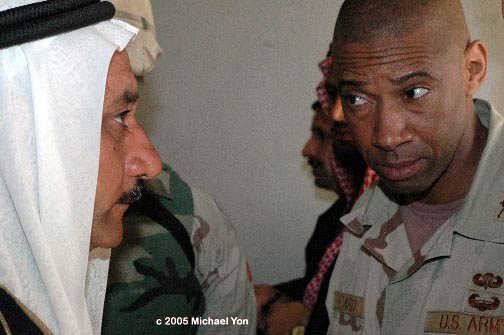
Colonel Petard in discussions with an Iraqi leader at Thursday's Peace Day meeting in Downtown Baquba.


Baquba, Iraq

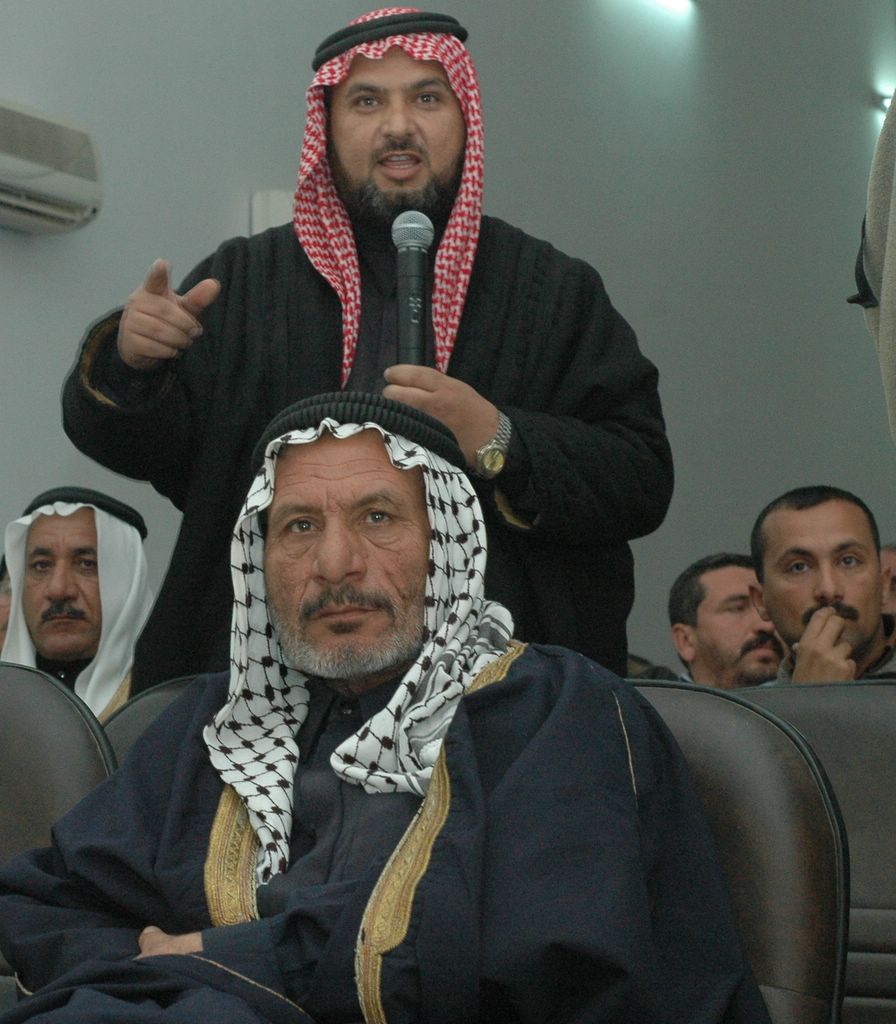
This morning began an important day for the Iraqis in Diyala Province. Colonel Petard, the commander of US Forces in this region, organized a meeting of about sixty important local leaders in downtown Baquba. It was billed as a "Peace Day." But any American with a passing interest in civic life would instantly recognize Peace Day as a town meeting. Democracy was in the house--sporadic eruptions of contention mired in mostly mundane considerations of traffic patterns, commerce and the slow pace of public works.


Although known as a hotbed of insurgency, Baquba remains relatively quiet days before the elections. CNN and some other major networks just rolled into town, putting a journalistic presence here. Crews from various nations attended the meeting.


While waiting for the meeting to begin, I talked with delegates and listened to their words with great interest. I asked Sheik Taha from Khalis if he would vote Sunday. Sheik Taha answered firmly, "Of course...elections represent cultural development for people. Elections are beautiful, nice, good things in this time, today."

"Will you ask your people to vote?"
"Yes, my people will vote. Safety is hope."

I asked Sheik Taha, "Would you like to say something directly to the American people?"

He thought for a moment then answered, "No specific message to Americans, but to people around the world, that we Iraqi people want good relations with all people--different languages and conventions all over the world, and bilateral interests to produce good achievements to humanity."


I knew what he was trying to say. And I thought he was both serious and sincere.


But another man from Khalis told me that while he wants to vote, he does not want to die, and he was more pessimistic about the elections, saying less than 50% of the Iraqis would vote. When I told him that if 50% of Americans voted in an election, it would be shocking, he didn't seem to believe me. The man also was not convinced that elections would produce better conditions.


"Why?" he asked, "When CIA is most powerful intelligence business in the world can they not make electricity here? America went to sky, to moon, they have unnatural powers, but they are not making electricity in Iraq. Why?"


If it were not so clear that his question was rhetorical, I might have answered that the electricity seems to work better in Iraq than in most countries I visit. Promises to install more reliable electricity have not been made good, but then, the insurgents have been sabotaging the grid. The man continued, "I wants withdrawal of Coalition. Iraq is civilization for 5,000 years. We invent writing and the wheel and civilization. We have no sovereignty today. Why?"


Soon, we finished the foyer-talk and the leaders were gathering in a large hall, preparing to begin Peace Day talks when, BOOM! the building shook. Something fell from a wall, and there was the sound of glass smashing. I heard a .50 caliber machine gun begin firing, along with M-16 rifle fire, and possibly some AK fire. I dashed outside to cover to see who was shooting at who, but all the fire seemed to be coming from our guys.

"I think it was a mortar," someone said.

"Mortar my ass! That was a VBIED!" someone yelled.

I asked an Iraqi policeman to unlock the steel door, and I walked out to the road. A suicide bomber had apparently tried to disrupt the Peace Day. His vehicle was totally gone, and another man was lying on the road without head or appendages. Three Iraqi soldiers were wounded. Within some minutes, an American Military Police officer was sorting through the rubble and found the piece of the car he was looking for: a plate with the Vehicle Identification Number. The soldier radioed the information, and literally only a few minutes later they knew that the car bomb had been delivered by a rental car from Baghdad.

I could imagine US forces and Iraqi police launching out the gates to that rental agency just a few minutes later.

While I was photographing the wreckage, more .50 caliber machine-gun fire erupted down the road as some American troops, who were setting up a nearby election site, came under attack. They shot back at the attackers, who fled, and then continued with their work.

Certainly the best thing that insurgents can do to boost morale in the 1st Infantry Division is to shoot at the soldiers. When these Americans get attacked, they are happy and want to stay in Iraq. Don't shoot at them, and they get grouchy and want to go home. The troops with the highest morale in Baquba seem to be the ones who take the most punishment.

The fighting ended quickly, literally within minutes, and while the Iraqi police cleaned the street, the Peace Day leaders began their meeting with Colonel Petard, as if nothing important had happened. A distraction for a moment, and then on to the important business of the day: airing gripes, complaining about this or that, telling the American commanders that they are not keeping their promises to fix the electricity. There was the twinkling of democracy.

At one point, an Iraqi leader leaned over to me and said, "Democracy will be a bad thing. One party will replace another party and this will change government." He didn't seem to get it. Public debate is the bedrock on which freedom is based. To have a voice, to have the stature to be heard, to be free to argue with those in charge, and to fire them by voting when needed--isn't that what it's all about?

Colonel Petard broke from the meeting to do a live interview with CNN. When he came back to the meetings there were handshakes and hearty embraces. There had been a meeting of the minds, the open exchange of opinions, and joint planning. There may have been a car bomb in the street that distracted attention momentarily, but the meeting was a success.

I hoped the media would be all over the story of the democracy in that room. But it was not. And they got it wrong. The only coverage I could find was about the car bomb, with one report erroneously saying it had ruined the Peace Day meeting. Not even close.


Wednesday, January 26, 2005

Standing the Line


Captain Derrick Burden, 1st Infantry Division


Wednesday in Baquba: Four Days to Elections

Baquba, Iraq

It's midnight in Baquba; the end of the deadliest day for American troops since the war began. At least 37 Americans died in Iraq today.

Morning began cool and dry, the sky stayed bright all day. I expected attacks, but in fact it was mostly quiet. I saw only a few tracers during daylight, and heard only one large explosion in the distance. As the sun retreated, I walked over to the Tactical Operations Center (TOC) to get the latest from the intelligence officer, Captain Williams.

According to Captain Williams, only four Improvised Explosive Devices (IEDs) had been reported so far today. One of the bombs was placed at a school. One was near a school. A third bomb hit a Humvee. The fourth bomb hit the news when the media reported that an election site was attacked. But it was a small bomb and no one was hurt. In fact, none of the attacks caused injuries today so far.

As the sun set, a call over my radio alerted me that if I wanted to go downtown tonight, I should meet up with "Ghost" (1-6 FA Platoon). I grabbed my gear, body armor and helmet and met up with Ghost at the gate.

The mission for tonight was to emplace concrete barriers at polling places to defend against car bombs during the elections. While the platoon set up security and began unloading the barriers with a crane, I ventured into the building. It was a school, or had been at one time; but the only people in the halls tonight were the ten Iraqi policemen guarding it. They were dressed in civilian clothes.

There was still twilight when one of the policemen approached me. "Salaam a lakem," I said. The men smiled. AK-47s were leaning against a nearby wall. The officer who had stepped forward politely asked: "Where is the Army?"

"I came with the Army."
"Iraqi Army?"
"American."
"They say Iraqi Army coming."
"Not with us."
"Very danger here. We only ten men. We need Army. Television say Iraqi Army and American Army come help us."
"I am not in the Army. You must talk with Captain Burden. The Captain is outside with his men."
"You not Army?"
"No." I pointed to my camera.
"Is very danger here. Tonight they will come. Attack us."
"You have only AK rifles?"
"Yes."
"No RPG rockets?"
"No RPG. Only AK."
"You have PKM machine guns?"
"Only AK. We must have Army. Very danger tonight."

He wasn't exaggerating. Policemen are killed in Baquba so frequently that it hardly makes news. One was killed earlier today.

Captain Burden walked into the courtyard, and the policeman began to explain his plight. Tensions were rising faster than the sun was setting. Captain Burden explained that the American soldiers would check on the policemen every hour, and if there was any problem, they could radio for help and the American Army would come.

The policeman was insistent. He wanted an army, Iraqi or American, to stay with his men that night. As if on cue, tracers shot overhead. Their conversation continued until one of Captain Burden's younger soldiers said, "Tell him to man-up."

Captain Burden shot a glance and told the soldier to get out, but the young soldier, realizing his words were neither funny nor helpful, tried to apologize, only making things worse. The Iraqi policeman turned on the soldier, looked at him intensely, and said: "I understand what you say. We are 'man-up.' Very danger here!" To his credit, the Iraqi man, who looked to be about forty, seemed to realize the words came from a young soldier who had not learned to control his tongue. The Iraqi man turned his attention back to Captain Burden, but those words had ratcheted up the tension among the police.

Other police had already abandoned their posts, yet with some combination of skill and presence, Captain Burden persuaded the policemen to stay.

When the Captain left the courtyard, I spoke to the policeman. He said he'd been an engineer in Saddam's army. He wanted the elections to go forward, but also wanted to live to see Sunday. Both of us knew the odds were not with him on that. As I write this, I wonder if he is already dead.

A couple of hours and a lot of explosions later, I was still with Captain Burden and the Ghost Platoon, setting up barriers at another school. It was dark. His men were walking down the muddy street, banging on metal driveway doors, asking people to move their cars so the Army could put out the barriers.

As things got busy with cars moving and the soldiers unloading the barriers, I hung back and struck up a conversation with an Iraqi man who'd been watching from the darkness. Like the policeman earlier, this man told me he'd been an engineer. We'd just started talking when two loud explosions thundered from the distance, and he said:

"Why they do this? Bombs...Why they do this? What they want?"
"You mean the American bombs?"
"No. You okay. Good. The others. What they want?"

Then he said something that many Iraqis have been telling me: "Please tell the Americans don't leave Iraq. Will much trouble if you are leaving. Most people want you stay in Iraq now."

We talked for about ten minutes, when I saw a rocket fly overhead. I pointed to it.

"Look," I said. "A rocket." And then there were five more. 155 mm RAP rounds. Coming from the base where I have been staying.
"They shooting every day..." he said.
"Yes," I coughed with a dry throat. Suddenly I could barely speak, "Every day," I coughed again.
"You want water?" he asked. It was the polite thing to do. Iraqis are polite people.
"No, thank you," I said, "I'm okay." But I coughed again.
"Are you sure? It is filtered."

I survive off instincts. And my instincts were that this guy was not going to kill me. I coughed again. "Yes," I said, "please, I do need water."

He disappeared into his house. If I couldn't trust him with water, this whole thing was worthless. He came back out with a pitcher of cold water. It did the trick and we continued talking, and soon after, he invited me to meet his family, and I did. A US fighter jet was circling the darkness overhead when I said goodbye to the family and we wished each other good luck.

Soon, Ghost loaded up the Humvees and we started to make our way back to base. The radio crackled with news of explosions as two polling stations were under attack. I thought of that first school and those ten policemen. I wondered if they were the targets. Then, another report came over the radio, saying that the Iraqi police had accidentally attacked some US soldiers nearby, but somehow managed not to hurt anyone.

Midnight passes leaving us one day closer to the elections.


Tuesday, January 25, 2005

Tuesday in Baquba: Five Days Before Elections


From the roof of the most dangerous place in Baquba: The Police Station
Michael Yon

Baquba, Iraq

The full moon is just reaching zenith as the clock nears midnight here in Baquba. Another eerily calm day has passed with little gunfire or explosions. I saw tracers piercing the sky but once today, and heard only one large explosion.

The inclement weather of the last few days has completely cleared. The rains are gone and the muddy streets are drying, the night is bright under full moon. Perfect conditions for this particular enemy to attack. And yet the insurgents do not attack. Not yet, anyway.

A US Army convoy is just now rolling in the gates after two successful raids tonight. Nobody knows why the enemy is not fighting back, but nobody thinks the insurgents have quit. The enemy must be biding its time. They are out there. Right now. Just down the road. Everyone knows it. But if the Americans knew exactly where the enemy was at this moment, the soldiers would be rolling back out the gates to attack them. Such is life here in Baquba.

The Americans have been busy placing about 40 polling stations around Baquba. The approximate two hundred Iraqi police and other forces who have been brought to Baquba to mind the elections have left Forward Operating Base Gabe to assume stations in the city. A US soldier told me today that dozens of Iraqi police had lost their nerve, and were quitting and going home. The police did not want to face the insurgents in Baquba and the near certainty of deadly attacks. The American soldier said that an Iraqi commander became angry, took charge of his men, and convinced them of the importance of staying the course in Baquba. The men agreed to stay.

The US troops here are especially alert, having lost five of their comrades in the past 24 hours in an accident nearby. The talk of the troops tonight was of sadness for their comrades who were just weeks from returning home after a hard year of fighting, only to die in an unfortunate accident.

Yet there is no hint of reluctance among the 1st Infantry Division Soldiers in Baquba. Some of the soldiers are looking for one last fight with the insurgents. Many of the soldiers have grown compassionate toward the Iraqi population in general, making their animosity toward the terrorists that much keener, and they want to face the insurgents at least one last time before heading home.

With the ever-more-bellicose threats of the terrorists to kill anyone who tries to vote, and the clear intentions of the Americans to kill anyone who tries to harm or threaten voters, there will be no surprises in the coming days when blood flows down the streets of Baquba.


Final Mission


Bradley Fighting Vehicle: Combat in Baquba


Baquba, Iraq

Five men from the 1st Infantry Division were killed when their Bradley Fighting Vehicle rolled into a canal last night. Two others were seriously injured. The accident occurred during a combat patrol that was launched from Forward Operating Base Gabe, in Baquba. The accident seems to have occurred due to a wash-out that undercut a road. When the Bradley crossed the area, the road partly collapsed, causing the vehicle to flip into a canal, drowning some of the soldiers. More information will be available pending notification of next of kin.


Seven Days to Forever


Intelligence clues led US soldiers to this
suspected insurgent's home in Baquba.
Michael Yon

Baquba, Iraq

A critical moment in Iraq’s future history is only seven days away. Nobody knows which direction the elections will lead Iraq, the region and, by extension, the world. If the painful journey to democracy eventually works, the implications for civilization might be as profound as those precipitated by the “unimaginable” fall of the Soviet Union. But if Iraq disintegrates into full-scale civil war, the future of the region will be less predictable than next year’s rainfall.

Here on the ground, it is clear that Iraq already is embroiled in civil war. But the war has not crossed some imaginary threshold whereupon people have labeled it civil war. Some would call the current state “civil unrest,” seemingly reticent to hazard uttering more ominous words, perhaps fearing the self-fulfilling power that words often bear. Or, perhaps, they are timid to speak the obvious. Whatever the label, people are being murdered here every day, often randomly and in spectacularly horrendous attacks. US experts are predicting massive suicide and other disruptive actions to thwart the elections.

And yet, here, in Baquba, one of the most dangerous places in Iraq, the atmosphere is almost painfully quiet. I have grown accustomed to daily explosions and machine-gun fire in Baquba. But today, nothing. The closer the elections, the quieter Baquba becomes.

The officers and men of the 1st Infantry Division theorize about what is happening—and not happening—in Baquba. Some believe the sudden rains and cold weather have driven the insurgents indoors; the insurgents here have earned reputations for being vicious but fair-weather fighters. They simply do not attack in uncomfortably cold or wet weather.

Other soldiers believe that constant raids by US forces have put the insurgents on the defense. Captain Jason Williams, a battalion intelligence officer with the US Army here in Baquba, told me less than one hour ago that US forces have recently detained approximately sixty insurgents. Having accompanied the Army on many of these raids, I have every reason to believe this claim.

But Captain Williams avoids speculation about the reasons for the decreased enemy activity in Baquba. The obvious backdrop is that the enemy is biding time and preparing for next Sunday, election day, to launch massive attacks against the forty or so polling stations in Baquba.

Yet only one bomb was found in Baquba this Monday. A small explosive was found at a local school and disarmed by Iraqi authorities, with no casualties.

Why has Baquba fallen silent?


Saturday, January 22, 2005

Showdown in Baquba


Staff Sergeant Richard Sturm, conducting combat operations with the US Army 1st Infantry Division in Baquba, Iraq.

The US Army has been preparing for the possibility of a bloody week in Baquba, one of the most restive areas of Iraq. Though Baquba and surrounds are in the news daily, most Americans seem to have never heard the name. Perhaps this is because many reports of fighting around Baquba, when reported at all, are referred to as, "just north of Baghdad," or "near Baghdad." Journalists rarely venture into this backwater, though it is only a short drive from the capital.

In advance of Iraq’s first elections, Coalition forces around Iraq have been preparing to defend against election-day attacks on January 30, 2005. In Baquba, those defenses have included aggressive and nearly nonstop raids for weeks in advance, netting arms caches, explosives, and people suspected of attacking Iraqi civilians and Americans.

"We plan to keep them on their heels," Lt. Col. Todd told me in his office at Forward Operating Base Warhorse in Baquba. "We plan to hit them and hit them, and keep our fingers in their chests and keep them off balance until the elections. They cannot mount effective attacks if they are on the run, and we plan to keep them on the run. Looking over their shoulders. Wondering what we will do next."

And yet the alerts continue: "Counterfire, counterfire, counterfire," a voice crackles over the radio as Army radar detects enemy mortars firing. A nearby American artillery battery is cleared to fire and Boom! Boom! Boom! The Army replies with deadly accuracy.

Around the clock, the US Army in Baquba launches small, Unmanned Aerial Vehicles (UAVs)—the tiny Ravens and the larger Shadow—sometimes circling target houses waiting for suspects to come or go. Some nights I go on the raids, other nights I sit and watch the live feed coming down from the UAVs. The American troops swoop in, operating in Baquba at will, often encountering bombs planted to kill them, sometimes encountering stiff resistance, but always delivering more punishment to the insurgents than the insurgents can manage to swallow.

If the insurgents are worthy enemies, so are the soldiers in the US Army 1st Infantry Division. And this week, the insurgents and the 1st Infantry Division, along with the Iraqi Police and Army, are in for a bloody showdown; if the insurgents are successful in derailing elections, they will gain an important psychological victory. But if the elections are deemed successful, maybe—just maybe—democracy will gain purchase in this volatile region.
Michael Yon, in Baquba